Polymail · YC S16
Rebuilding a legacy SaaS asset for its next growth era.
Fractional GTM Lead · 2025–Present
Partnering directly with Polymail’s owner to diagnose growth constraints, sharpen commercial positioning, reactivate dormant demand, and rebuild the GTM system around acquisition, lifecycle, advocacy, reporting, and product-led growth.
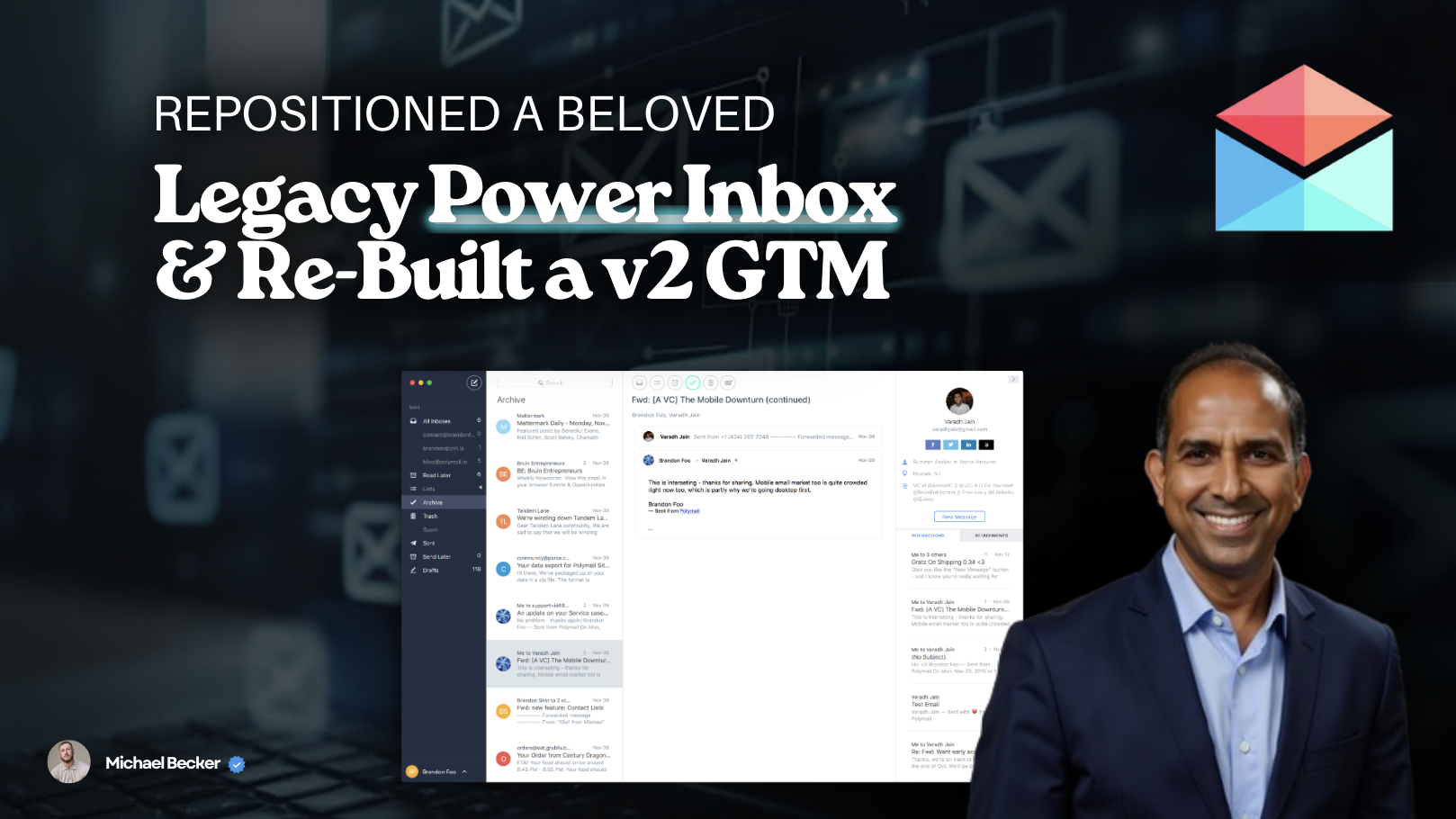
GTM v2
Commercial repositioning
Full “v2” GTM plan built
New website
16+ web pages shipped
Trial acquisition
2,200+ trials generated
Reactivation
185K-user win-back built
The diagnosis
A loyal user base was masking a deeper commercial constraint.
Polymail entered a new ownership era as a mature YC SaaS asset with a deeply loyal core user base. Years of subscriber and revenue contraction, however, had exposed a more fundamental problem.
Acquisition was inconsistent. Positioning had become diffuse. The company lacked a scalable distribution engine, and sustained churn meant new signups alone could never restore durable growth.
The mandate evolved from “grow signups” into a more important question: where was the engine actually failing, and which commercial systems needed to be rebuilt before meaningful scale was possible?
Results · first year
The commercial system began moving again.
Growth infrastructure was rebuilt across acquisition, reactivation, positioning, lifecycle, reporting, and customer advocacy—while the active subscriber base held through the transition.
3.4×
Peak web-traffic growth, from 4.3K in March 2025 to 14.5K in January 2026.
≈40%
Reduction in churn from its mid-February peak.
1,300+
Active subscribers maintained during the GTM rebuild.
The strategy
Rebuild the engine in the order the data demanded.
I worked directly with the owner across the commercial system, using weekly MRR, subscriber, trial, and acquisition data to identify constraints and prioritize the highest-leverage interventions.
Reposition the product around high-value inbox workflows and specific operator personas.
Reactivate historical demand through a segmented 185K-user win-back motion.
Rebuild the website narrative and commercial architecture across 16+ pages.
Improve activation with lifecycle and onboarding interventions tied to value moments.
Build commercial proof through testimonials, operator stories, and persona-specific evidence.
Establish growth reporting around MRR, trials, signups, churn, and subscriber movement.
Test scalable acquisition across search, affiliates, outbound, referrals, sponsorships, and creators.
Advance the category story toward AI-enabled attention management.
Selected execution
What I actually shipped.
Strategy only mattered once it became a working commercial system. These were the primary builds.
GTM plan
Designed an end-to-end GTM model using the 4DX framework to isolate the decisive levers across acquisition, activation, retention, and monetization.
Cold outbound pilot
Sourced a 22.5K-contact ICP list, built a low-friction trial landing page, and launched a two-touch sequence optimized for response and learning.
Retargeting creative
Produced fast-turn creative for outbound traffic and site visitors, prioritizing message reinforcement over unfocused net-new demand.
Trial welcome system
Rebuilt a 14-step maze into a value-moment-driven flow designed to reduce overwhelm, create usage first, and earn the upgrade.
Website overhaul
Led positioning, information architecture, copy, agency communication, execution, and iteration across 16+ commercial pages.
Content engine
Produced evergreen posts, carousels, infographics, blogs, and video to restore narrative consistency and inbound credibility.
185K-user win-back
Mapped a phased reactivation strategy across segmentation, messaging, and execution—a potential 3–6× revenue lever if deployed correctly.
Inbox Ops toolkit
Built 30+ response-focused templates mapped to funnel stage, persona, use case, and CTA to support inbound, outbound, and win-back motions.
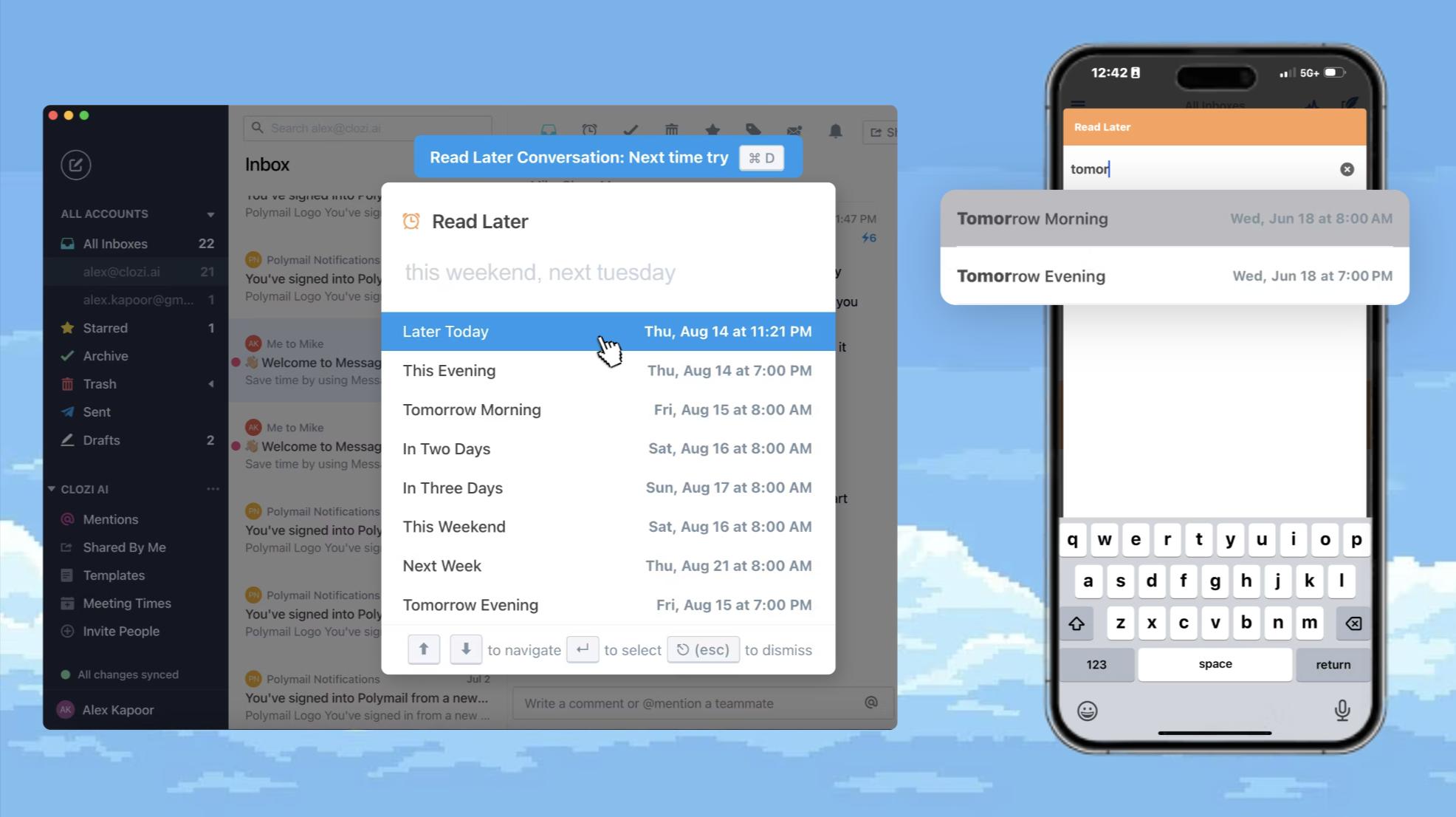
Operator lessons
What rebuilding a mature SaaS engine revealed.
Inspect retention before scaling acquisition.Traffic and signups can conceal a structurally weak revenue engine.
Separate distribution failure from product failure.A company can carry both. The capital-allocation sequence changes depending on which constraint dominates.
Read cohorts before prescribing channels.Growth strategy begins with diagnosis and revenue movement—not a list of tactics.
Treat dormant users as an asset class.Historical demand can be cheaper and more informative than net-new acquisition.
Build proof while rebuilding the engine.Positioning, customer evidence, and persona clarity increase leverage across acquisition, retention, and strategic outcomes.